



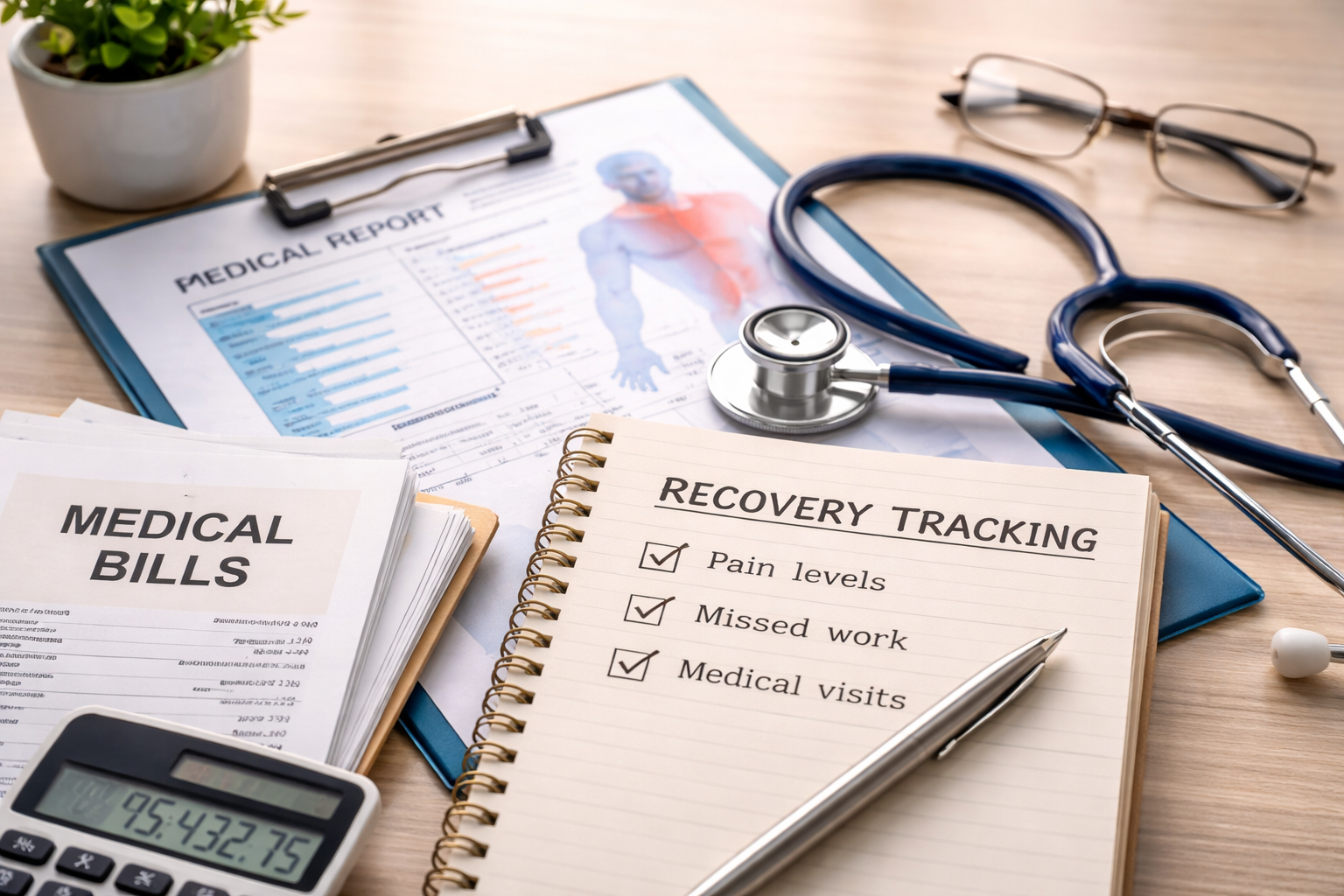
Recovering from an injury is not only about healing physically but also about protecting your legal rights and financial future. How you track your recovery progress can directly affect the compensation you may receive after an accident. Understanding what to document and why it matters can put you in a stronger position, so keep reading to learn how this process works.
Why does tracking recovery progress matter in injury claims?
Tracking your recovery creates a clear narrative of how the injury has affected your daily life over time. This documentation supports claims for medical expenses, pain and suffering, and future care needs. A well documented recovery story can strengthen negotiations, so read on to see how this impacts your case.
Insurance adjusters often look for gaps or inconsistencies in treatment and reporting. Without consistent tracking, they may argue that injuries were minor or resolved quickly. Understanding this risk makes proper documentation essential, so keep reading to protect your claim.
What counts as recovery progress in a legal context?
Recovery progress includes more than just whether you feel better. It involves medical improvements, setbacks, limitations, and how your injury affects work and personal activities. These details help quantify damages, so continue reading to see what should be included.
Courts and insurers rely on objective and subjective evidence together. Test results, physician notes, and personal journals all play a role. Knowing what qualifies as recovery progress helps you stay organized, so keep reading for practical guidance.
How do medical records support your recovery timeline?
Medical records provide an official, third party account of your injury and treatment. They show diagnoses, prescribed care, and how your condition evolves over time. These records are foundational evidence, so continue reading to understand how to use them effectively.
Consistent follow ups and adherence to treatment plans demonstrate that you took your recovery seriously. Missed appointments or unexplained gaps can weaken your claim. Staying proactive with medical care is critical, so keep reading for tips on staying consistent.
What types of medical documents should you keep?
Maintaining complete medical documentation helps paint a full picture of your recovery journey. These records should be organized and easy to access when needed. Understanding which documents matter most can save time later, so continue reading.
Before reviewing specific items, it helps to know which records commonly support injury claims and recovery tracking.
- Initial emergency or urgent care reports explaining the immediate impact of the injury and early symptoms.
- Diagnostic test results such as X rays, MRIs, or CT scans that confirm injury severity.
- Treatment notes and progress reports from doctors, therapists, and specialists documenting improvements or setbacks.
- Medication records showing prescriptions, dosage changes, and ongoing pain management needs.
Keeping these documents together helps establish continuity of care, so keep reading to learn how personal records add another layer of support.
How can a recovery journal strengthen your claim?
A recovery journal captures daily experiences that medical records may not fully reflect. Pain levels, mobility challenges, and emotional struggles all contribute to the value of a claim. Writing consistently creates a personal timeline, so keep reading to see how to do this effectively.
This journal helps humanize your injury by showing how it affects your everyday life. It can also refresh your memory months later during negotiations or testimony. Learning how to maintain one properly is key, so continue reading.
What should you include in a recovery journal?
Your journal should focus on clear, honest observations about your condition. Regular entries provide credibility and context. Knowing what to include makes journaling easier, so keep reading.
Before listing specifics, it helps to understand that simple, consistent notes are often more persuasive than dramatic language.
- Daily pain levels and symptoms with notes on what triggers discomfort.
- Physical limitations such as difficulty walking, lifting, or sleeping.
- Emotional and mental effects including stress, anxiety, or frustration.
- Impact on work and routines like missed shifts or reduced productivity.
These entries help connect medical facts to real life consequences, so continue reading to see how work records fit in.
How does missed work factor into recovery tracking?
Lost income is a major component of many injury claims. Tracking missed workdays and reduced earning capacity supports compensation requests. Clear records make these losses easier to prove, so keep reading for details.
Employers, pay stubs, and schedules can verify time missed due to injury. When combined with medical notes, they create a strong link between your condition and lost wages. Understanding this connection is essential, so continue reading.
What work related documents should you save?
Work documentation provides financial context to your recovery. These records help show how the injury disrupted your ability to earn. Knowing which documents matter most can strengthen your case, so keep reading.
Before outlining examples, it helps to recognize that consistency between work and medical records is key.
- Pay stubs before and after the injury showing income changes.
- Employer letters or HR records confirming missed days or modified duties.
- Disability or leave forms documenting approved time off.
- Performance reviews or warnings linked to injury related limitations.
Together, these records reinforce the economic impact of your recovery, so continue reading to understand how visual evidence can help.
Can photos and videos support recovery tracking?
Visual evidence adds clarity to written records by showing physical changes over time. Photos of injuries, mobility aids, or home modifications can be powerful. This type of evidence often resonates with insurers and juries, so keep reading to learn how to use it correctly.
Videos demonstrating limited movement or therapy exercises can further support claims. When dated and organized, visuals help illustrate progress or lack of recovery. Knowing how to capture them properly is important, so continue reading.
How often should you update your recovery records?
Consistency matters more than perfection when tracking recovery. Regular updates show an ongoing effort to document your condition honestly. Understanding the right frequency helps avoid gaps, so keep reading.
Daily or weekly updates are usually sufficient depending on injury severity. Aligning updates with medical appointments can also be effective. Finding a sustainable routine is key, so continue reading for comparison guidance.
Different recovery tracking methods
Different tracking tools offer unique advantages depending on your situation. Understanding how they compare helps you choose the right approach. Reviewing this comparison can clarify your options, so keep reading.
| Tracking method | Best use | Key benefit |
|---|---|---|
| Medical records | Clinical proof | Objective professional documentation |
| Recovery journal | Daily impact | Personal context and consistency |
| Photos and videos | Visual evidence | Clear illustration of physical effects |
Using a combination of methods often provides the strongest support, so continue reading to learn how to avoid common mistakes.
What mistakes can weaken recovery tracking?
Even well intentioned efforts can fall short if mistakes occur. Inconsistent documentation or exaggeration can raise red flags. Knowing what to avoid protects your credibility, so keep reading.
Common issues include skipping treatment, failing to follow medical advice, or delaying documentation. These gaps can be used to question injury severity. Awareness is your first defense, so continue reading.
How does recovery tracking affect settlement negotiations?
Strong recovery documentation increases leverage during negotiations. It provides concrete evidence that supports compensation demands. Insurers are more likely to take claims seriously when records are thorough, so keep reading to understand this advantage.
Clear documentation can also speed up the settlement process. When evidence is organized, disputes over injury impact are reduced. This preparation often leads to better outcomes, so continue reading to see how legal guidance fits in.
When should you involve a personal injury lawyer?
A lawyer can help you understand what recovery details matter most for your specific case. Legal guidance ensures your documentation aligns with compensation goals. Knowing when to seek help can make a difference, so keep reading.
Early involvement allows your attorney to advise you on tracking methods and avoiding pitfalls. This proactive approach can strengthen your claim from the start. Understanding this timing is important, so continue reading.
Turning recovery into rightful compensation
Tracking your recovery is about more than paperwork, it is about telling your full story accurately and consistently. When done correctly, it connects your injury to real world consequences and supports fair compensation. Staying organized and proactive helps protect your future, so keep reading until the end.
Knapp Moss helps injury victims understand what documentation matters and how to use it effectively throughout the claims process. Our team works with you to ensure your recovery progress is clearly presented and fully valued. Contact Knapp Moss today to discuss how we can help protect your claim.
Frequently Asked Questions
You should start as soon as possible, ideally from the day of the injury. Early documentation helps establish a clear baseline and prevents gaps later.
Yes, even minor symptoms can demonstrate ongoing impact and discomfort. Over time, these details can significantly affect claim value.
Yes, digital tools are acceptable if entries are consistent and dated. They can be just as effective as handwritten journals.
Setbacks are common and should be documented honestly. They help show the true complexity of your recovery process.
Sharing relevant details can help doctors understand your symptoms better. It can also improve the accuracy of medical records.