


Slip and fall accidents often seem straightforward at first, but proving what caused the fall can become complicated very quickly. Evidence can disappear, memories fade, and conditions change before you realize how important documentation is. Understanding how to preserve evidence early can protect your rights and strengthen your potential claim as you continue reading.
Why is evidence preservation critical after a slip and fall?
Evidence helps establish what caused the fall, who was responsible, and how severe your injuries truly are. Without it, property owners and insurers may dispute liability or downplay the danger involved. Preserving evidence early gives your claim credibility and keeps important facts from being lost.
In many slip and fall cases, the hazardous condition is fixed within hours or days. Spills are cleaned, ice melts, and warning signs appear after the incident. Acting quickly ensures the original conditions are documented before changes occur.
What should you do immediately after the fall?
Right after a slip and fall, taking calm and deliberate steps can help protect both your health and your potential claim while details are still fresh. Here are the most important actions to take as soon as possible:
- Check yourself for injuries and move to a safe area if you can do so without worsening your condition
- Identify what caused the fall and note any visible hazards, such as spills, uneven surfaces, or poor lighting
- Look around for witnesses who saw the fall or noticed the hazardous condition beforehand
- Take mental notes of warning signs, barriers, or the lack of them in the area
- Avoid making statements about fault or minimizing your injuries while the situation is being addressed
How can photos and videos strengthen your claim?
Visual evidence is one of the most powerful tools in a slip and fall case. Photos and videos capture conditions exactly as they were at the time of the accident. They provide objective proof that is difficult to dispute later.
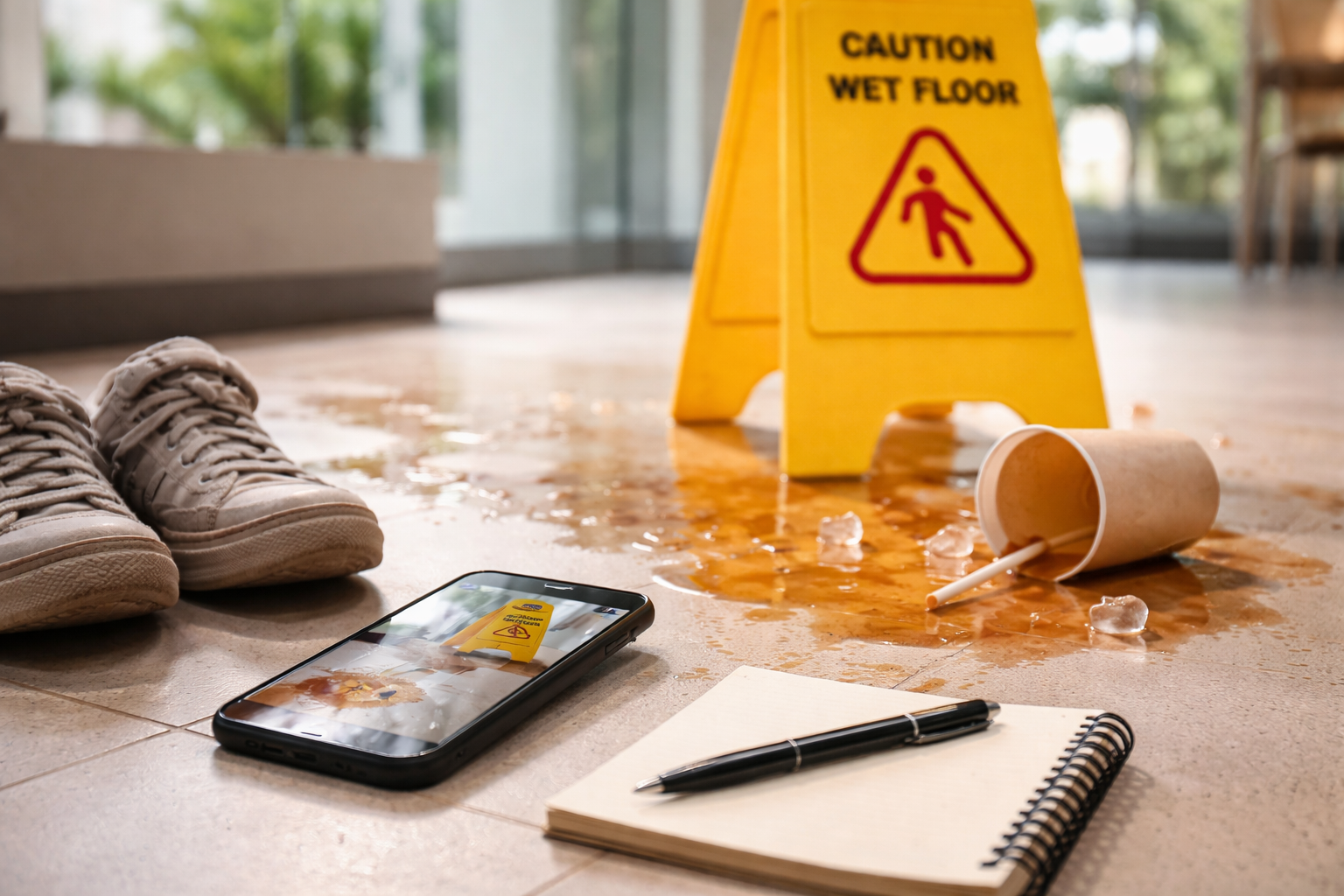
Use your phone to photograph the hazard from multiple angles and distances. Include close ups of spills, cracks, uneven flooring, or poor lighting. Wider shots should show the surrounding area to provide context and help readers understand the full scene.
What details should your photos include?
Clear and well planned photos can capture more than just the hazard itself and help explain why the condition was dangerous at the time of the fall. When taking pictures, focus on including the following details:
- Close up images of the specific hazard, such as a spill, crack, loose flooring, or uneven surface
- Wider shots that show where the hazard was located within the surrounding area
- Photos that capture lighting conditions, shadows, or obstructions that made the hazard harder to see
- Images showing the presence or absence of warning signs, cones, or barriers
- Multiple angles and distances to clearly document depth, height, or slope of the hazard
Why are witness statements so important?
Witnesses can confirm what happened and support your version of events. Their observations may reveal how long the hazard existed or whether employees were aware of it. Independent accounts add credibility to your claim.
If anyone saw you fall, politely ask for their name and contact information. Even brief statements can be helpful later. Witnesses often move on quickly, so gathering this information early is essential.
Learn More: Why Witness Statements Matter (And How to Get Them After an Accident)
How should you document witness information?
Once you identify people who saw the fall or the conditions leading up to it, careful documentation can help preserve their observations before memories fade. When recording witness information, focus on these key points:
- Write down each witness’s full name and reliable contact information as soon as possible
- Note where the witness was standing and what they were doing at the time of the fall
- Record what the witness observed before, during, and after the incident using their own words
- Include the date and time you spoke with the witness to establish a clear timeline
- Avoid adding opinions or assumptions and stick only to factual details the witness personally noticed
Should you report the incident to the property owner?
Reporting the incident creates an official record that the fall occurred. Many businesses and property owners have incident report forms for this purpose. These reports can support your claim by confirming the time and location of the accident.
When making a report, stick to the facts and avoid assigning blame. Ask for a copy of the report or confirmation that one was completed. This documentation can become an important piece of evidence later.
What mistakes should you avoid in incident reports?
When completing or reviewing an incident report, small missteps can unintentionally weaken your claim later. Keeping your language careful and factual helps protect your position, so be mindful of these common mistakes:
- Avoid guessing about what caused the fall or speculating on fault
- Do not minimize your injuries or say you feel fine if you are unsure
- Refrain from apologizing or making statements that could be interpreted as accepting blame
- Do not include unnecessary details or opinions beyond what you directly observed
- Never sign a report without reading it carefully or requesting a copy for your records
How do medical records support slip and fall evidence?
Medical records connect your injuries directly to the fall. They document the type, severity, and timing of your injuries. Without this connection, insurers may argue your injuries came from another cause.
Seek medical care as soon as possible, even if symptoms seem minor. Some injuries worsen over time, and delays can raise questions about their seriousness. Early treatment strengthens both your health and your legal position.
What medical documents should you keep?
As you organize your records, make sure to keep the following documents:
- Emergency room or urgent care records from your initial evaluation
- Doctor visit notes, follow up appointment summaries, and specialist reports
- Imaging results such as X rays, MRIs, or CT scans related to the injury
- Prescriptions, medication lists, and pharmacy receipts
- Physical therapy records, treatment plans, and medical expense receipts
Why should you preserve physical evidence?
Physical items involved in the fall can provide direct proof of hazardous conditions. Shoes, clothing, or assistive devices may show wear, damage, or contamination. These details can support your account of what happened.
Store these items in their original condition. Avoid washing or repairing them, as changes could destroy important evidence. Preserving physical evidence keeps your claim grounded in tangible facts.
What types of physical evidence matter most?
Certain items are especially useful in slip and fall cases. The following examples often help demonstrate how the fall occurred and why it caused injuries:
- Shoes worn during the fall, especially if they show residue or damage
- Clothing with stains, tears, or moisture
- Personal items damaged during the incident
- Assistive devices like canes or walkers involved in the fall
Keeping these items intact helps maintain their evidentiary value as your case progresses.
How can maintenance records and surveillance footage help?
Property owners often have records that show cleaning schedules or repairs. Surveillance footage may capture the fall or show how long the hazard existed. These materials can be critical in proving negligence.
Act quickly to request this information. Many systems automatically overwrite footage within days. A prompt request helps preserve evidence before it disappears.
What should you compare when reviewing evidence sources?
Different types of evidence serve different purposes in a slip and fall case. Understanding how they work together can strengthen your overall claim.
Here is a simple comparison to help clarify their roles.
| Evidence type | What it shows | Why it matters |
|---|---|---|
| Photos and videos | Hazard and scene conditions | Visual proof of danger |
| Witness statements | Independent observations | Credibility and context |
| Medical records | Injury details and timeline | Link between fall and harm |
Combining these sources creates a clearer picture of what happened and why liability exists.
How long should you keep slip and fall evidence?
You should keep all evidence until your case is fully resolved. Slip and fall claims can take months or longer, depending on complexity. Discarding evidence too early can weaken your position.
Even after a settlement, keep copies of important documents for your records. Having a complete file ensures you are prepared if questions arise later. Patience and organization pay off in the long run.
When should you speak with a lawyer about evidence?
Consulting a lawyer early can help you avoid costly mistakes. An attorney can guide you on what evidence matters most and how to preserve it properly. Legal guidance ensures nothing important is overlooked.
Lawyers can also send preservation letters to property owners. These letters require them to retain records and footage. Early legal involvement can protect critical evidence from being destroyed.
Turning proof into power after a fall
Preserving evidence after a slip and fall is about protecting your ability to tell the full story. Every photo, record, and statement adds clarity to what happened. Taking these steps early can make the difference between a weak claim and a strong one.
At Knapp Moss, we help injured individuals gather, protect, and use evidence effectively. Our team understands how quickly proof can disappear and how to act before it does.
Contact Knapp Moss today to discuss your slip and fall case and protect your rights.
Frequently Asked Questions
You should document the accident as soon as it is safe to do so. Immediate documentation helps capture conditions before they change.
Yes, but the claim may be more challenging. Other evidence like witness statements and medical records can still support your case.
It is best to consult a lawyer before sharing evidence. Premature disclosure can sometimes be used against you.
This does not prevent a claim. Photos, witness statements, and reports can still show the condition existed at the time of the fall.
Yes, medical evaluation creates a record of your condition. Some injuries take time to appear and documentation is crucial.