


Burn injuries often leave more than physical scars, and understanding how burn injury cases are investigated and proven in California can make a critical difference for injured victims. From determining the source of the burn to establishing legal responsibility, these cases rely on detailed evidence, expert analysis, and strict compliance with California liability laws.
Why are burn injury cases legally complex in California?
Burn injury claims are complex because they often involve multiple parties, technical investigations, and overlapping liability theories. Fires, chemical exposure, electrical faults, and scalding incidents can stem from unsafe products, property hazards, or negligent conduct.
California law requires injured victims to prove not only that a burn occurred, but also how and why it happened. This means tracing the event back to a specific failure, action, or legal duty that was breached.
In many cases, evidence can disappear quickly due to cleanup, repairs, or fire suppression efforts. Early investigation becomes essential to preserve facts that support liability.
What types of incidents commonly lead to burn injury claims?
Burn injuries can arise in a wide range of settings, each with unique legal implications. Identifying the type of incident helps guide the investigation and determine which laws apply.
Common sources of burn injury claims include:
- Residential or commercial fires caused by faulty wiring or appliances
- Chemical burns from industrial products or cleaning agents
- Scalding injuries from defective water heaters or restaurant spills
- Electrical burns from exposed wiring or unsafe work environments
- Explosions involving gas lines, machinery, or pressurized equipment
Each scenario demands a different investigative approach and may involve property owners, manufacturers, employers, or contractors.
How does a burn injury investigation begin?
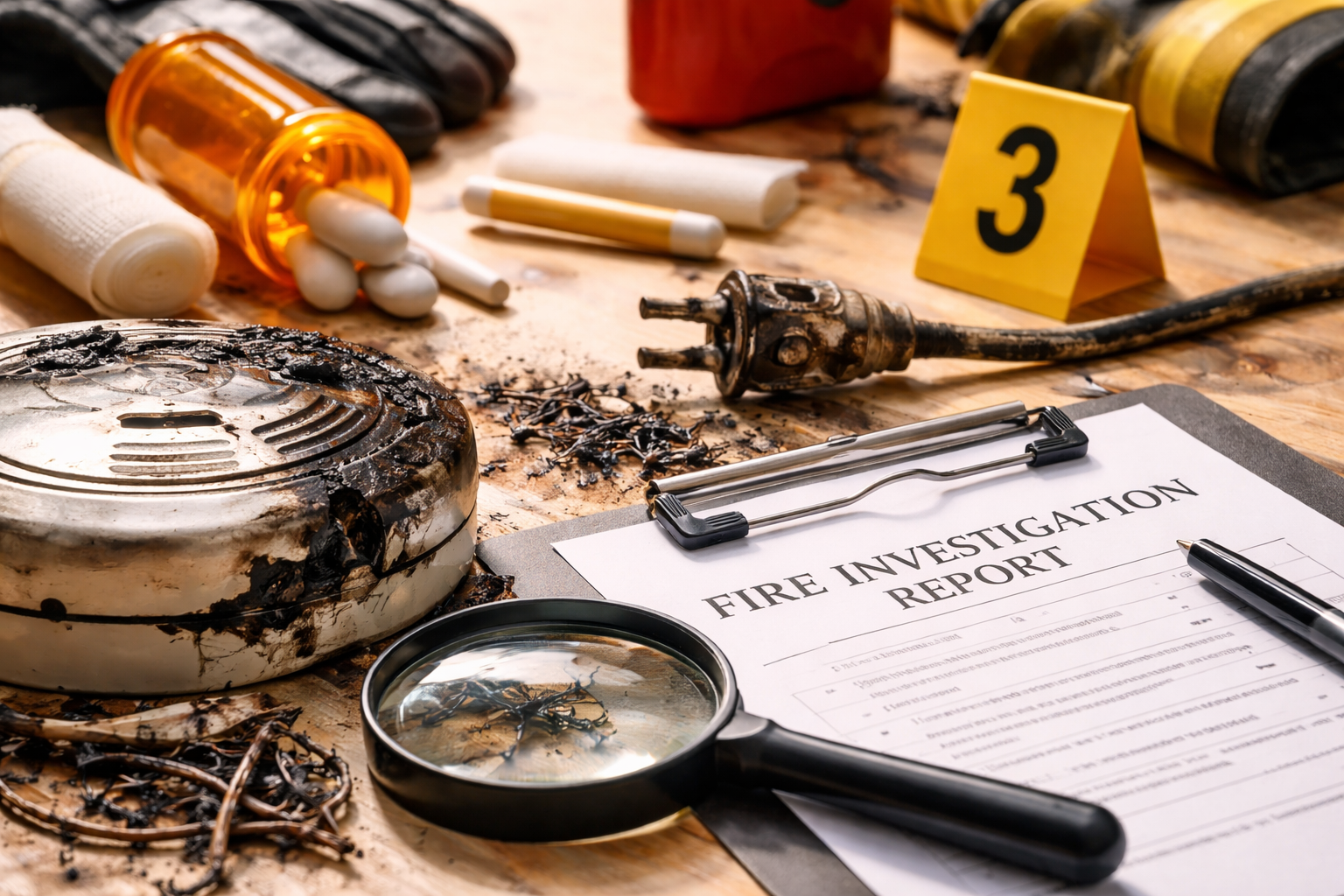
A burn injury investigation typically begins by securing the scene and identifying the burn source. Investigators examine burn patterns, residue, equipment damage, and surrounding conditions to reconstruct what happened.
Fire investigators or forensic engineers may be called in early to analyze ignition points or chemical reactions. Their findings often form the foundation of the legal claim.
Medical records are also reviewed to match the injury type with the suspected cause. Consistency between medical evidence and physical findings strengthens credibility.
Who may be legally responsible for burn injuries?
Burn injury liability often extends beyond a single individual or business. California law allows claims against multiple parties when their combined actions contributed to the injury.
Potentially responsible parties may include property owners who failed to maintain safe premises, manufacturers of defective products, employers who ignored safety standards, or contractors who performed negligent work.
Identifying all liable parties increases the likelihood of full compensation, especially when severe burns lead to long term care needs.
What role does premises liability play in burn injury cases?
When burns occur on someone else’s property, premises liability laws often apply. Property owners in California must take reasonable steps to prevent hazardous conditions that could cause injury.
This includes maintaining electrical systems, monitoring fire risks, storing chemicals safely, and ensuring compliance with building and fire codes. Failure to address known dangers may establish negligence.
To succeed, the injured party must show the owner knew or should have known about the hazard and failed to fix it or provide warnings.
How are product defects investigated in burn injury claims?
Burn injuries frequently involve defective products such as appliances, heaters, batteries, or industrial chemicals. Product liability claims focus on design flaws, manufacturing defects, or inadequate warnings.
Investigators preserve the product and analyze whether it malfunctioned during normal use. Testing may reveal overheating, electrical failures, or unsafe chemical reactions.
California law allows injured victims to pursue strict liability, meaning they may not need to prove negligence if the product itself was unreasonably dangerous.
What evidence is critical to proving a burn injury case?
Strong burn injury cases rely on layered evidence that supports both causation and damages. This evidence must connect the injury directly to the responsible party’s conduct or product.
Key evidence often includes:
- Photographs and videos of the injury and scene
- Fire department and incident reports
- Medical records detailing burn severity and treatment
- Expert testimony from engineers or fire investigators
- Maintenance records or product recall data
Each piece reinforces the narrative of how the injury occurred and why compensation is justified.
How do experts strengthen burn injury claims?
Expert witnesses play a vital role in explaining technical details to judges and juries. Their opinions help translate complex scientific findings into clear conclusions.
Medical experts describe burn depth, permanence, and future treatment needs. Fire or engineering experts explain ignition sources, chemical reactions, or mechanical failures.
In California courts, expert testimony often determines whether causation is proven by a preponderance of the evidence.
How is fault evaluated under California law?
California follows a comparative fault system, meaning responsibility can be shared among multiple parties. Even injured victims may bear partial fault without losing their right to compensation.
Investigators assess whether the victim followed safety instructions or warnings. Defendants often attempt to shift blame to reduce financial exposure.
Damage awards are adjusted based on each party’s percentage of fault, making thorough investigation essential to limit unfair blame.
What damages can burn injury victims recover?
Burn injuries often result in extensive physical, emotional, and financial losses. California law allows victims to seek both economic and non economic damages.
Before reviewing damages, it helps to understand how different losses are categorized and evaluated.
| Damage type | Examples | Purpose |
|---|---|---|
| Economic | Medical bills, lost income, rehabilitation | Covers measurable financial losses |
| Non economic | Pain, disfigurement, emotional distress | Addresses personal suffering |
| Future damages | Ongoing care, surgeries, reduced earning capacity | Accounts for long term impact |
Severe burns may also justify punitive damages if the conduct involved recklessness or conscious disregard for safety.
How long do victims have to file a burn injury claim?
California’s statute of limitations generally allows two years from the date of injury to file a personal injury lawsuit. Claims against government entities require much shorter notice deadlines.
Missing these deadlines can permanently bar recovery, regardless of how strong the evidence may be. Early legal guidance ensures compliance with all procedural requirements.
Prompt action also improves evidence preservation and witness availability.
What challenges arise in proving burn injury cases?
Burn injury cases often face resistance from insurers and corporate defendants. Disputes may arise over causation, severity, or whether safety standards were met.
Defendants may argue the burn resulted from misuse, unforeseeable events, or preexisting conditions. Overcoming these defenses requires meticulous documentation and expert analysis.
A coordinated legal strategy helps counter these arguments and protect the victim’s interests.
Turning scars into accountability
Burn injuries can change lives in an instant, but accountability does not happen automatically. Understanding how burn injury cases are investigated and proven in California empowers victims to protect their rights and pursue meaningful recovery.
Knapp Moss brings experience, resources, and compassion to complex burn injury cases, working closely with experts to build strong claims and pursue maximum compensation. If you or a loved one suffered a serious burn injury, reach out to Knapp Moss today to explore your legal options.
Frequently Asked Questions
Any burn injury caused by another party’s negligence or defective product may support a claim. Severity affects damages but not eligibility.
Yes, civil cases rely on a lower burden of proof than criminal or regulatory investigations. Expert testimony can still establish causation.
California law allows claims against multiple responsible parties. Liability is divided based on each party’s contribution to the injury.
Compensation for physical injuries is generally not taxable. Punitive damages or interest may be subject to taxes.
Timelines vary based on complexity, severity, and cooperation from defendants. Serious burn cases often take longer due to expert involvement.