


Being struck by a driver who flees the scene can be overwhelming and confusing, and understanding what happens if you are hit by a driver who flees the scene is the first step toward protecting your rights in California. Victims often worry about the cost of repairs, medical treatment and how to pursue compensation when they cannot immediately identify the person responsible. This guide explains your legal options and the practical steps you can take to secure evidence and build a strong claim under California’s personal injury laws.
What qualifies as a hit and run accident in California?
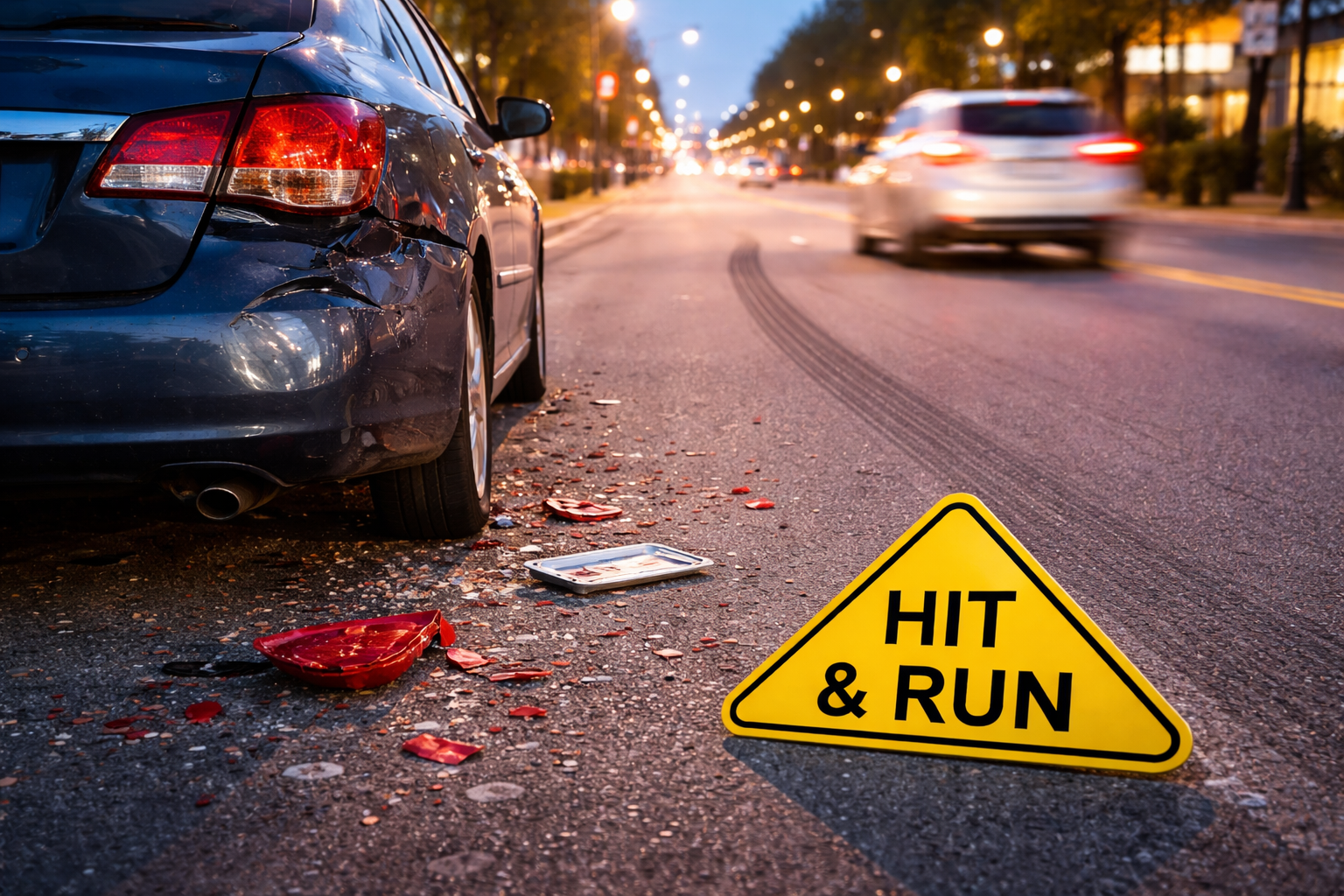
California law defines a hit and run as any situation in which a motorist leaves the scene of a collision without stopping to provide their information or render help. This applies to accidents involving vehicles, pedestrians or property. The severity of the accident, including injuries or damages, influences whether the offense is charged as a misdemeanor or felony.
Hit and run accidents are more common than many people realize, especially in busy city intersections, crowded parking lots and freeways. Even minor contact can qualify as a hit and run if the driver does not stop. The law considers the act of fleeing itself, not the level of damage, and penalties can be significant.
Someone can still be charged with a hit and run even if they were not at fault. Leaving the scene before exchanging information is enough to trigger criminal consequences. Drivers are required to stop regardless of whether they believe the crash is serious.
How does law enforcement investigate hit and run accidents?
Law enforcement investigates hit and run accidents by reviewing scene evidence, interviewing witnesses and examining traffic cameras. Officers often collect physical evidence such as debris, tire marks or paint transfers. These details can help narrow down the type of vehicle or identify specific suspects.
Police may request footage from nearby businesses, homes or highway systems to track fleeing vehicles. Investigators frequently use license plate reader technology in busy corridors. Even partial plate numbers or vehicle descriptions from witnesses can support an investigation.
Although not every suspect is located, an official police report still plays an important role. It documents the event and helps support insurance claims and legal action later. Filing promptly can preserve evidence and strengthen your ability to seek compensation.
Steps you should take after the collision
If you are able to remain at the scene safely, you should do the following:
- Document the scene, including vehicle damage, debris and surroundings, using photos or video.
- Obtain witness information since neutral observations can support your version of events.
- Contact law enforcement quickly to ensure a police report is filed and evidence is recorded.
Minor injuries may worsen after the initial shock wears off, so medical evaluation is important. A prompt checkup can identify hidden injuries and create documentation for later claims. It also establishes a link between the accident and your symptoms, which insurers often challenge.
Notifying your insurer early is also crucial. Some policies require quick reporting to preserve coverage, especially for uninsured motorist claims. Waiting can lead to delays or disputes about fault and coverage.
What insurance coverage applies when the at-fault driver is unknown?
If the identity of the driver is unknown, victims often rely on uninsured motorist coverage. This type of insurance compensates you for medical expenses, lost wages and pain and suffering when the driver cannot be found or does not carry insurance. California does not require uninsured motorist coverage, but many drivers select it.
Insurance negotiations can be complicated because even your own insurer may challenge the value of the claim. Adjusters may question whether injuries were preexisting or whether property damage truly aligns with the reported event. Legal representation can help counter low settlement offers and protect your interests.
In situations where the driver is identified later, victims may shift to pursuing compensation from that individual’s insurance coverage. Subrogation is the process where one insurer pursues reimbursement from another after paying a claim. The key is maintaining proper documentation from the beginning.
Key factors that affect compensation after a hit and run
Compensation depends on the injuries, property damage and long-term effects on daily life. Courts and insurers also consider whether the victim experienced emotional distress, such as anxiety or trauma. Future treatment costs and loss of earning capacity can significantly increase the value of a claim.
Because the driver is initially unknown, proving liability may be more challenging. However, evidence such as witness statements, medical records and photos can help establish damages. Uninsured motorist policies allow recovery without direct proof of the other driver’s identity.
Victims should keep detailed records of expenses, including receipts and bills. These documents create a clear timeline and show how the accident continues to impact life after the crash. They are crucial when demonstrating the full extent of losses.
How does uninsured motorist coverage compare to suing a located driver?
Below is a quick comparison of uninsured motorist coverage and identifying the driver:
| Aspect | Uninsured motorist coverage | Suing a identified driver |
| Coverage source | Your own insurer | The at fault driver’s insurer |
| Timeline | Often faster resolution | May take longer due to litigation |
| Evidence burden | Proof of damages required | Proof of liability and damages required |
Both avenues aim to compensate victims for losses. The appropriate path depends on whether the driver is identified and the level of cooperation from insurers.
Challenges victims face when the driver is never identified
Some victims experience frustration and uncertainty when the driver is not caught. There can be emotional stress when no one is held accountable. Many also worry about whether insurance coverage will be enough for long term recovery.
Uninsured motorist claims can help bridge the financial gap. However, insurers may still dispute claim value or require extensive documentation. Legal support increases the chance of a fair settlement when evidence is limited.
Some victims may consider civil claims against unknown defendants, though these are uncommon and often rely heavily on insurance coverage. Regardless of the path, early evidence collection and legal guidance remain key.
What mistakes should victims avoid after a hit and run?
It helps to avoid these common errors:
- Delaying medical treatment, which weakens the link between injuries and the crash.
- Accepting early settlement offers that do not reflect the true extent of damages.
- Failing to document evidence, including repair estimates, witness details and photographs.
Some victims also hesitate to report the incident because the driver fled. Reporting is essential for legal and insurance purposes. It also ensures proper documentation if the driver is located later.
Avoiding statements that downplay injuries or fault is important. What you say can be used by insurers to reduce your compensation.
What role can an attorney play in a hit and run case?
A personal injury attorney can help evaluate insurance options, gather evidence and negotiate with insurers. Attorneys also understand California laws and how to present a strong claim when the driver is not found. Their goal is to secure fair compensation and protect your rights.
Legal representation can increase settlement values. It can also reduce the burden of managing paperwork, deadlines and communications while you focus on recovery. Many attorneys work on contingency, meaning you do not owe fees unless your case succeeds.
An attorney can also help coordinate expert evaluations and accident reconstruction. These tools strengthen your claim and create leverage when negotiating.
Moving forward with clarity and confidence
The aftermath of a hit and run accident can feel isolating and confusing, especially when the at-fault driver is unknown. Understanding your insurance coverage, documenting evidence and seeking legal support can help you pursue fair compensation. Acting quickly improves your ability to recover financial losses and hold someone accountable when possible.
Knapp Moss can support you throughout your claim, help gather evidence and negotiate with insurers to secure the compensation you deserve. Contact us today for a free consultation.
Frequently Asked Questions
Seek medical attention and contact law enforcement as soon as possible. Document the scene and gather witness information to support your claim.
Yes, uninsured motorist coverage may help provide compensation for your injuries and property damage. It can also support recovery for lost wages and pain and suffering.
Personal injury claims generally must be filed within two years. Filing promptly improves evidence preservation and strengthens your case.
No, it is optional, but it can be valuable after a hit and run crash. It can help cover expenses when the driver is never identified or has no insurance.
It depends on your policy and insurer. Some insurers may raise rates, while others may not if you were not at fault