


Obtaining a police or accident report is one of the most important steps you can take after a collision, and learning how to get and preserve a police or accident report after a crash can make a significant difference in the strength of your personal injury claim. This guide explains where to find the report, how to secure it, and what steps help protect your rights.
Why is a police or accident report important for your claim?
A police report documents the facts of the crash in a way that helps insurance companies understand what happened. It also provides key information you may not remember under stress, such as witness names or specific roadway conditions. Even though these reports are not the final word on fault, they often influence how insurers evaluate a claim.
This report establishes an objective timeline of events. It also creates a formal record of injuries or property damage observed at the scene. Insurance adjusters rely heavily on the report when deciding liability or settlement value.
For victims, the police report serves as a starting point for gathering additional evidence. It can guide conversations with your lawyer and help identify the issues that may need deeper investigation.
Learn More: Do I Need a Police Report for My Injury Case?
Where do you request a police or accident report in California?
You generally obtain the report through the law enforcement agency that responded to your crash. This may be a city police department, county sheriff’s office, or the California Highway Patrol.
Responding agencies usually have online request portals. Some allow in-person or mail-in requests for people who prefer physical paperwork. Each agency sets its own fees and processing time, which can range from a few days to several weeks.
Before requesting a copy, you often need basic details such as the date of the crash, location, officer badge number, or the incident number. If you do not have this information, you can still submit a request using your name and the names of other involved parties.
What information will you find inside a police report?
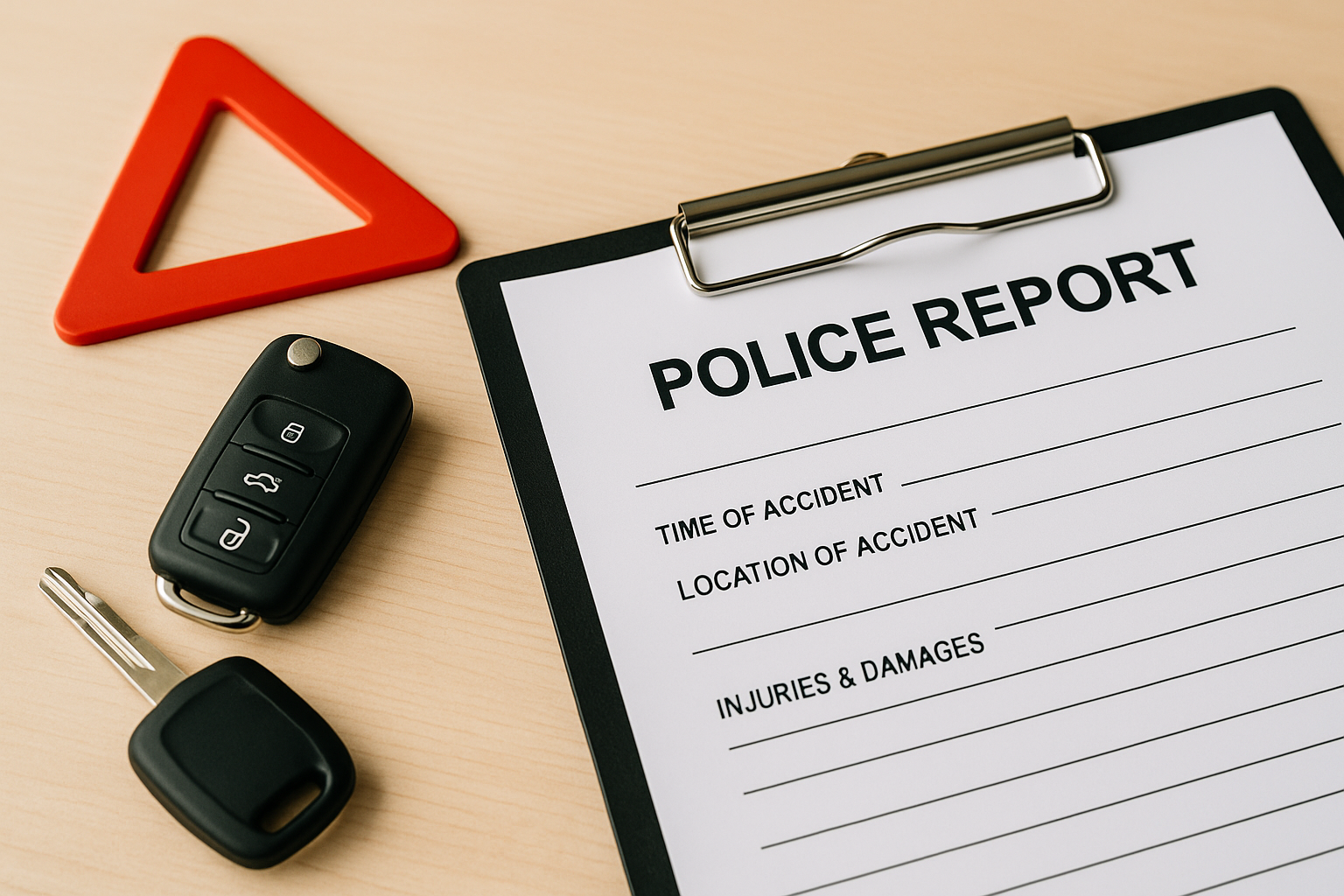
A police report contains several key details that help establish what happened at the scene and how the crash occurred. You may find information such as:
- Driver and witness statements that describe how each person believed the collision occurred.
- Officer observations including roadway conditions, traffic violations, visible injuries, and damage.
- Crash diagrams that show vehicle positions, impact points, and measurements taken at the scene.
- Weather and lighting conditions that may have contributed to the crash.
- Vehicle and driver details including license information, insurance data, and plate numbers.
- Photographs or attachments captured by the responding officer when available.
- Identified contributing factors such as speeding, distraction, impairment, or failure to yield.
- Citations issued to any driver for violating traffic laws.
How to request the report from common California agencies
Many victims start by identifying which agency responded to the crash. Once you know the agency, the request is straightforward. Here is a comparison of the three most common sources.
To help you understand the key differences, the table below highlights the typical process for each agency.
| Agency | How to Request | Average Processing Time |
|---|---|---|
| California Highway Patrol (CHP) | Submit CHP 190 form online, by mail, or in person; ID required | 1 to 2 weeks |
| Local Police Department | Many offer online portals; some require in-person verification | 5 to 10 business days |
| County Sheriff’s Office | Requests made through records division; may require written form | 1 to 3 weeks |
What documents do you need when requesting the report?
When you request a police or accident report, agencies typically require certain identifying details to confirm your involvement and process the request without delays. Documents you may need include:
- Government issued identification to verify your identity as an involved party.
- Incident or report number if available, which helps the agency locate the correct file quickly.
- Date and location of the crash to narrow down the search.
- Names of the drivers involved to match the record to the correct individuals.
- Vehicle information and insurance details which some agencies use to verify participation.
- Payment for applicable fees since many agencies charge a small amount for report preparation or copies.
What should you do while waiting for the police report to be released?
Some reports take days or weeks to become available. During this time, you can continue gathering supporting evidence. This helps ensure your claim is not delayed.
Photograph your injuries and vehicle damage regularly to create a timeline of your recovery. Keep receipts, repair estimates, or medical records organized so they can be easily shared with your lawyer.
Communicate with your insurance company without giving detailed statements. You can report the crash, but it is safer to wait for the report and legal guidance before discussing fault.
How to preserve the police or accident report once you receive it
After you obtain the report, keeping it secure and accessible is essential because it often becomes one of the key documents used to support your claim. These are the steps to preserve your police or accident report:
- Make both digital and physical copies so you always have a backup if one version becomes lost or damaged.
- Store digital versions on a password protected device or cloud folder to prevent unauthorized access.
- Keep physical copies in a safe, dry location where they cannot be misplaced or accidentally altered.
- Check that all copies are clear and readable since blurry or incomplete pages can slow down your claim.
- Share a copy with your lawyer right away so they can review it for accuracy and use it to guide your case strategy.
- Monitor for errors or missing details and notify your lawyer immediately if something needs clarification or correction.
What should you look for when reviewing the police report?
Reviewing the report helps ensure accuracy. You should look for misspelled names, incorrect vehicle descriptions, or errors in the crash narrative. Mistakes can affect how insurers evaluate your claim.
Sometimes officers misinterpret victim statements due to stress or communication issues. If something is wrong, your lawyer can help clarify the information or request supplemental documentation.
Look for listed witnesses, contributing factors, and any citations issued. These details often guide liability discussions and settlement negotiations.
What if the police report contains incorrect or incomplete information?
Police officers sometimes miss details in chaotic crash scenes. If the report contains mistakes, do not panic. You have options to address the issue.
Some agencies allow supplemental statements. These statements do not rewrite the report but add your version of events. Your lawyer can assist with crafting a clear explanation.
Insurance companies may also consider additional evidence outside the report. Photographs, medical records, and expert evaluations can help correct or counter inaccurate conclusions.
How can a lawyer help you obtain and preserve your police report?
An experienced personal injury lawyer can request the report on your behalf and track its status. They also know how to interpret each section to identify evidence that supports your claim.
Lawyers review the report for errors and gather additional evidence if something appears missing. They may contact witnesses, obtain surveillance footage, or consult experts to strengthen your claim.
When you work with Knapp Moss, your legal team ensures every detail is preserved correctly and used to protect your rights. For help with your report and your claim, contact Knapp Moss today.
A smoother road to recovery starts with strong documentation
Success in a personal injury case often begins with simple but crucial steps. Obtaining and preserving a police or accident report lays the foundation for proving fault and documenting your losses.
Knapp Moss can guide you through each step, help secure the evidence you need, and protect you from common insurance pitfalls. Contact our team today for a free consultation.
Call Knapp Moss today for experienced legal guidance.
Frequently Asked Questions
Most agencies release reports within several days to a few weeks. Timelines vary based on staffing, request volume, and whether the investigation is still open.
Access is usually limited to involved parties, insurance companies, and legal representatives. Some details may be redacted to protect private information.
Insurance companies rely heavily on the report, but it is not the final determination of liability. They also consider statements, evidence, and policy rules.
You cannot rewrite the original report, but you may submit a supplemental statement. This allows you to clarify errors or add missing details.
You can file a counter report at a local police station or online. This still creates a formal record that supports your injury claim.